Better buses, not just bus reform: What we heard at the UK Bus Summit
by Catherine Goddard
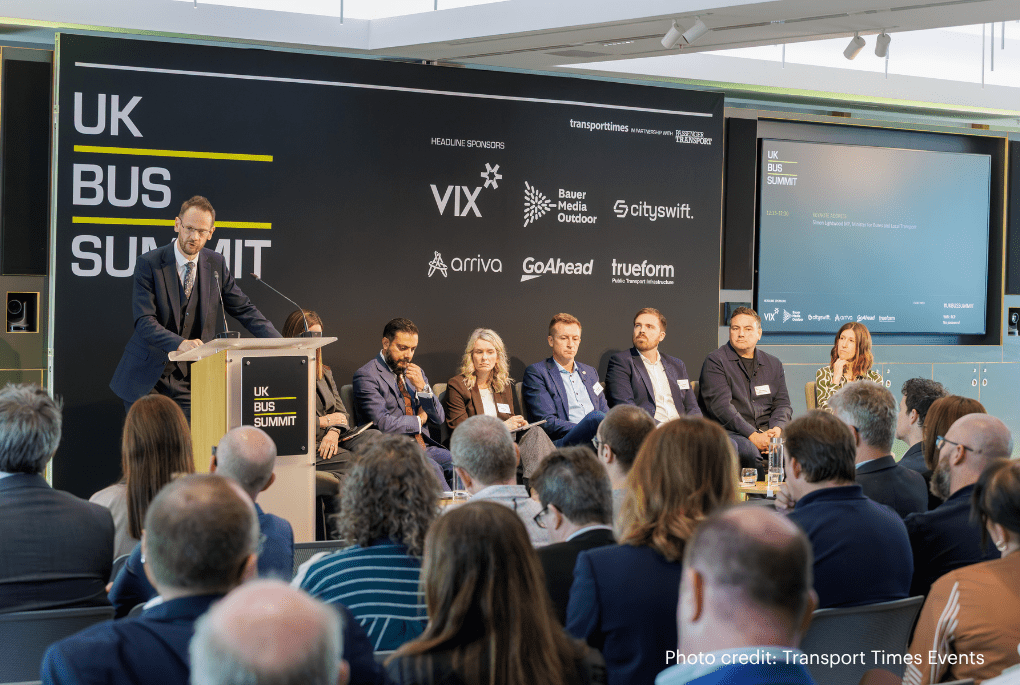
At this year’s UK Bus Summit in Liverpool, the hot topic was bus reform. With authorities at various stages of putting reform plans into action, change was presented less like a fixed route and more like a choose-your-own-adventure. One thing was clear: what matters most is whether passengers feel the difference.
The right time and place
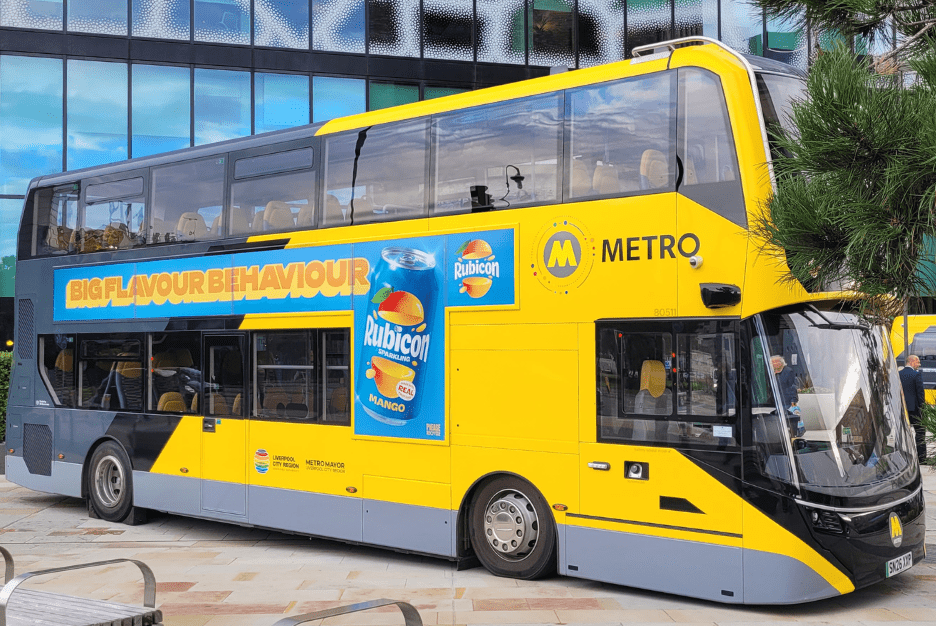
Liverpool felt like a fitting place for this year’s UK Bus Summit, which took place just four days after the City Region’s first franchised buses came into service. Arriving at the venue, delegates got to see one of the Metro network’s spanking-new, yellow-liveried buses parked outside.
It was a reminder that the reform the industry has spent years discussing is now becoming real. First in Greater Manchester, now in the Liverpool City Region, with many more local authorities are mobilising to transform bus services and their wider transport networks.
Ministerial keynote strikes a supportive note
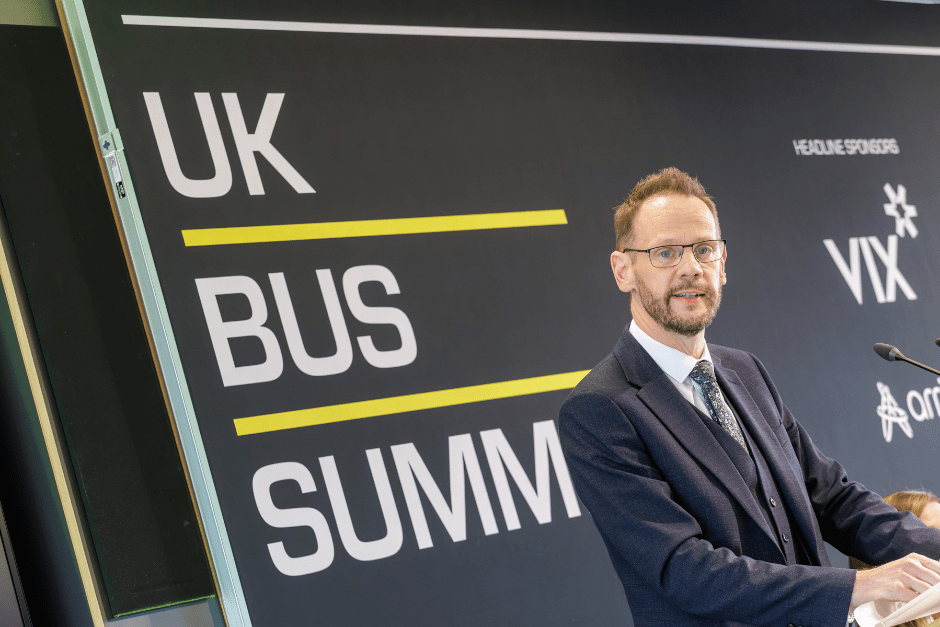
Simon Lightwood MP, Minister for Local Transport and Sustainability, was the Summit’s keynote speaker. He acknowledged the value of buses as everyday lifelines that keep communities connected. He emphasised that local leaders need the powers and funding to make services work better.
Lightwood said that local control is at the heart of the Government’s approach, pointing to the greater freedom and funding authorities now have to shape their own networks through franchising, Enhanced Partnerships and other locally-led models.
He noted that growing bus use means making services both better and more affordable, and confirmed the Government’s commitment to bring the single bus fare cap in England outside London down from £3 to £2 from January 2027.
The message was supportive, but it also handed a challenge to the industry: the government can provide resources, powers and policy direction, but what happens with those tools locally will determine whether passengers actually see a better bus service.
Different routes, similar destinations
The opening “Devolution Panel” showed how differently the challenge of creating connected, productive places through high-performing bus networks can play out from place to place.
The panel brought together transport leaders from five regions at different points in their bus reform journeys. Cllr Steve Foulkes, Chair of Liverpool City Region Combined Authority’s Transport Committee, was speaking fresh from the experience of launching bus franchising. For him, the move was a “game changer” that could precede a “golden age” for buses.
Foulkes talked about the need to look at bus services in the context of the whole journey, improving integration, so that transport can connect people with jobs, education and opportunity.
Katharine Hammond, Chief Executive of South Yorkshire Mayoral Combined Authority, brought home why those connections matter. She noted that around one in four households in South Yorkshire has no access to a car, making public transport essential for social mobility and economic opportunity.
Her ambition is not simply a better bus network, but one that gives people access to a much bigger pool of jobs and opportunities without having to leave the region.
Cllr Nadine Peatfield, Deputy Mayor of the East Midlands Mayoral Combined Authority, stressed that franchising wasn’t the only road to reform. The East Midlands is pursuing an Enhanced Partnership, combining operators’ day-to-day expertise with local authorities’ strategic vision. For Peatfield, what’s essential is that passengers experience reliability, simplicity and affordability.
As West Yorkshire prepares to bring its own services under public control, Cllr Eleanor Thomson, Deputy Chair of West Yorkshire Combined Authority, spoke about the details that passengers need them to get right, such as joined-up timetables, fares and ticketing. Cllr Alan Moir, Vice Chair of Strathclyde Partnership for Transport, added that concessionary fares and fare caps can play an important role in meeting passengers’ needs for simple, good value.
Despite differences between the regions’ approaches to delivering bus reform, it became apparent that the outcomes they were trying to achieve were much alike.
Franchising, Enhanced Partnerships and greater local control may give authorities different levers to pull, but the ambition is the same: connect more people with opportunity and give them a public transport network that is reliable, affordable and straightforward to use.
The passenger non-negotiables
Next up, a panel on buses’ “non-negotiables” focused the conversation on four critical passenger needs: reliability, accessibility, affordability and safety.
Laura Hadzik, Chair of Women in Bus and Coach, who chaired the session, highlighted that passengers experience these things together. An affordable bus ticket or accessible vehicle is of little use if the service doesn’t run when it should.
Sarah Boyd, Chief Executive of Lothian, made a similar point. A fare is not genuinely affordable, she argued, if an unreliable service causes someone to miss a shift or connection.
The “non-negotiables” quickly emerged as inter-dependent pillars of passenger trust. Brian O’Rourke, Chief Executive and Founder of CitySwift, described the timetable as a contract with passengers: “If you break that contract, you’re breaking trust.”
Matthew Wilks, Business Development Director at Vix Technology, proposed a fifth non-negotiable: simplicity. The systems behind modern transport may be complex, he argued, but the passenger experience should be “as streamlined and as smooth as possible”.
For fares and payments, that points towards simpler products and integrated systems that do more of the hard work in the background. Boyd said more than half of Lothian’s fare-paying customers now use contactless, trusting the system to calculate the right fare cap for them.
Whether it’s timetables, fares, payments or safety, the message was similar: trust is built across the whole journey. If one of the non-negotiables fails, confidence in the service can be lost.
From reform to reality
Another panel on the future of urban bus networks focused on the realities of delivering reform.
Kara Wood, Head of Franchising at Liverpool City Region, spoke from very recent experience. After years of strategy and preparation, the first franchised services had launched in St Helens just days earlier, a milestone that earned her a round of applause from the room.
“Strategy, legislation and governance all matter,” she said. “But actually, implementation happens in practical places. It happens in the depots, it happens in bus stops, in customer contact centres, those day-to-day conversations that the drivers are having.”
The distinction between the model and delivery became the thread running through the discussion. Wood described franchising as a powerful tool, but “not the answer to everything”. Nigel Featham, Managing Director of Go North West, reached a similar conclusion from his experience operating within Greater Manchester’s Bee Network.
Reform, he pointed out, doesn’t make some of the industry’s oldest problems disappear: “Whatever regulatory model you choose, buses sitting in traffic are still buses sitting in traffic.” His next line could have been the tagline for the day:
“Changing the model is an achievement; making buses better is the test.”
Andy Gibbons, Head of Buses at Leicester City Council, reinforced the point. Leicester has pursued major network improvements through an Enhanced Partnership rather than franchising. A different model, but many of the same challenges, and the same focus on outcomes.
So how do you turn new powers and investment into better buses? Data and collaboration emerged as key parts of the answer. Miki Szikszai, Chief Executive and Founder of Snapper, argued that simply having more data about services and performance is not enough; it needs to become useful intelligence that helps people make better decisions.
Finally, the conversation came back to collaboration. Authorities may have greater control, but they still need operators’ expertise, and specialist technology providers to deliver the experience that bus passengers want and deserve.
Better buses, however we get there
So, what are our biggest takeaways from the UK Bus Summit?
There was plenty of enthusiasm for reform, but it was clear that changing governance is not considered an achievement in itself. Franchising and Enhanced Partnerships give authorities great potential to transform, but what’s important is what passengers get at the end of it.
Success will be measured by whether authorities deliver services they can rely on, fares that are simple to understand and affordable, barely-there payment experiences, better connections between modes, and safe, accessible end-to-end journeys.
Whichever reform adventure each region chooses, the opportunity is bigger than making bus services better. Get buses right, and they can widen access to opportunity, support thriving places and economies, reduce car dependency and create healthier, connected communities.
Making franchising work in practice
For local authorities planning bus reform, our eBook, Fare Collection in Bus Franchising, is a practical guide to choosing the right fare collection model for their network. Compare different approaches and learn what to buy and deploy to give passengers the simple fare payment experience they want.
 Insight
 Knowledge
 News
News