Fare Collection Procurement – Designed to Fail
by Amin Shayan
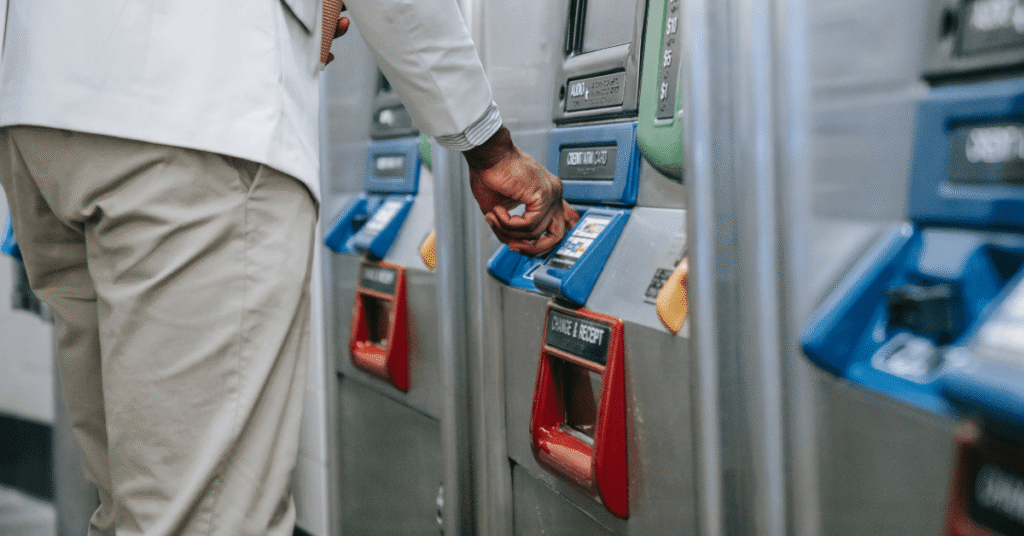
The exorbitant costs of transit ticketing
Across the world, public transit agencies are spending obscene sums on fare collection procurements. Traditional ticketing systems, proprietary, closed, and custom-built, are among the most expensive technology investments an agency will ever make. Large-scale deployments routinely cost hundreds of millions of dollars, with lifecycle costs consuming 10–15% of annual fare revenue. In some cases, agencies effectively commit the equivalent of three full years of fare revenue just to procure, maintain, and upgrade a ticketing system.
Consider a few examples:
- Melbourne’s fare system upgrade started as a $1.7bn contract, and has had multiple delays and cost blowouts. For a city that collects $900m of fare revenue, this implies a fare collection cost of around 15% of revenue.
- New York’s MTA OMNY system is projected to cost more than US $700 million, a figure equal to nearly three years of farebox recovery from its subway turnstiles.
- Transport for London’s Oyster system, launched in 2003, initially cost over £1 billion to develop and has required hundreds of millions more in upgrades and contracts over its lifespan.
- In the U.S., medium-sized city deployments often exceed $50–100 million, even for systems that serve fewer than a million daily riders.
- NZTA awarded a $1.4bn contract for a national ticketing system in 2022. Three years later an independent report by LEK concluded that there is a “very high likelihood of further significant delays” which inevitably come with further costs.
Imagine if a retailer announced they had agreed to spend multiple years of revenue just to process payments! Shareholders would demand accountability, and leadership would be replaced. Yet this is precisely the situation transit agencies find themselves in today. It’s just become an accepted norm. The procurement process is clearly broken!
The retail sector solved this problem decades ago. Merchants process billions of card and mobile wallet transactions every day, typically paying 1–3% per transaction in processing costs. For a supermarket generating £500 million in annual revenue, this equates to £5–15 million per year. Not £150m per year.
Retail moved long ago to open, standardized, cloud-based systems that deliver security, scale, and interoperability at a fraction of the cost. Transit agencies now have the same opportunity. It is no longer defensible for agencies to lock themselves into capital-intensive, proprietary systems that drain budgets, restrict innovation, and take years to deploy.
Adopting a modern, low-cost open payment system is not just an innovation choice, it is a matter of fiscal responsibility. Just as no retailer today would justify building its own closed payment infrastructure, no transit agency can afford to ignore the efficiencies, cost savings, and passenger experience benefits of retail-grade open payments.
How did we end up here?
Despite rapid innovation in the payments industry, public transit has remained tethered to outdated, costly systems.
Four structural issues explain why transit agencies continue to overpay for fare collection technology.
- Biases in Procurement Systems
Government procurement frameworks are often designed around large, one-off, “big bang” projects. Agencies bundle fare collection into massive, multi-year contracts that attempt to address every conceivable requirement upfront. While this approach seems logical, it has unintended consequences:
- Scope creep becomes standard practice: Agencies are incentivized to future-proof procurements, which drives up complexity and cost.
- Only large vendors qualify: Larger scope and bonding requirements mean smaller, more agile providers are excluded, limiting competition and innovation.
- Costs escalate before delivery: With requirements locked in years ahead of deployment, agencies end up buying functionality that is outdated or unnecessary by the time systems launch.
The result is an entrenched cycle: limited bidders, inflated project sizes, and reduced value for money.
- The Constraints of Legacy Software
Traditional ticketing systems were not built for adaptability. Most are written in outdated programming languages, deployed as individual on-premise instances, and lack modern architecture. Key limitations include:
Monolithic applications: Legacy software isn’t built on microservices, so even small changes are bespoke, have complex interdependencies, and a higher risk of failure. Be prepared for endless change requests.
High maintenance costs: Custom codebases require scarce, expensive expertise to support.
Slow change management: Complexity means risk, which in turn results in fewer deployments with long testing cycles. The end result is innovation cycles that lag years behind the payments and retail industries.
Because these systems are monolithic and inflexible, agencies are locked into vendor-controlled roadmaps. This dependency makes it nearly impossible to adapt quickly to new payment technologies such as open-loop contactless, mobile wallets, or account-based ticketing.
- The Illusion of Risk
Many agencies believe that relying on a single vendor reduces project risk, the idea of having “one throat to choke.” In reality, the opposite is true:
Single-vendor projects frequently run late. Multi-stream programs spanning hardware, software, and payments are simply too complex for any one vendor to execute flawlessly.
Risk becomes concentrated. When one supplier controls the entire stack, delays or failures cascade across the project.
Best-of-breed solutions are being ignored. In every other industry, hardware and payments are provided by specialized vendors, integrated through open standards. Transit is one of the few sectors still clinging to vertically integrated single-vendor models.
The result is not lower risk, but systemic fragility, with agencies left waiting years for systems that arrive late, over budget, and technologically behind the curve.
- Bad Benchmarks
Perhaps the most insidious problem is benchmarking. High-cost projects are used as a reference point for new procurements, perpetuating the cycle of overspending:
Yesterday’s failures become tomorrow’s norms. If one agency spends $500 million on a fare system, others assume similar budgets are justifiable.
Comparisons are inward-looking. Instead of looking at how retail, hospitality, or banking deliver low-cost, scalable payments, transit agencies compare themselves only to other transit projects. Value-for-money is distorted. With inflated baselines, agencies overlook affordable, cloud-native, and modular alternatives.
The result is a market where spending hundreds of millions on ticketing seems normal, even though industries processing vastly higher transaction volumes (retail, banking) achieve far lower costs through open standards and competition.
Lessons from Other Industries
Public transit is not the first sector to grapple with the challenge of costly, monolithic technology systems. Other industries have already gone through a similar evolution—moving from bespoke, capital-heavy platforms to modular, cloud-native, best-of-breed ecosystems that dramatically reduce costs and increase agility.
- From ERP Mega-Projects to SaaS Ecosystems
In the 1990s and early 2000s, large enterprises adopted enterprise resource planning (ERP) systems such as SAP and Oracle. These were massive, multi-year deployments designed to handle everything from HR to finance to inventory management in a single integrated suite. Costs often spiraled out of control:
- Hershey’s SAP implementation in 1999 ran over budget and contributed to a $100 million loss in sales during a critical season due to delays and system failures.
- Waste Management’s lawsuit against SAP in 2008 cited a $100 million failed project, one of many examples of ERP overhauls that failed to deliver any value.
Today, few businesses would lock themselves into a single ERP vendor to do everything. Instead, they use specialized SaaS platforms: Workday for HR, Salesforce for CRM, Xero or NetSuite for accounting, Shopify for e-commerce. These applications are modular, cloud-based, and connected via open APIs—delivering flexibility, scalability, and vastly lower costs.
- The Retail Payments Transformation
Retail payments followed the same arc. In the past, merchants often relied on proprietary checkout systems tied to specific banks or networks. These were costly, inflexible, and geographically fragmented. Today, merchants of all sizes plug into global payment platforms that are cloud-hosted, interoperable, and priced per transaction. The cost of accepting payments in retail is now so low and so standardized that it is considered a routine business utility, not a capital project.
- The Desktop Ecosystem Shift
Even in personal computing, once dominated by closed, proprietary ecosystems, the shift has been towards open standards and interoperable ecosystems. Applications no longer need to be bundled in a single proprietary suite; users choose best-in-class tools (Google Workspace, Slack, Zoom, Dropbox) and integrate them seamlessly.
- The Inevitability of Change in Transit
Each of these industries once defended bespoke, monolithic platforms as necessary for reliability and risk management. Each eventually transitioned to open, modular, cloud-based architectures because the economics and innovation cycles made it inevitable. Transit ticketing is no different. The costs of legacy systems are unsustainable, the pace of retail payments innovation is accelerating, and passengers now expect the same seamless payment experience in transit that they enjoy everywhere else.
The question is not if transit ticketing will follow this path, but when.
The Right Approach: Agile, Open, and Future-Proof
Building the next generation of fare collection systems requires a complete shift in mindset. Instead of massive, one-off procurements that try to predict every future requirement, agencies should adopt an agile, modular approach, delivering functionality iteratively, integrating proven technologies, and continuously evolving.
The most successful programs in other industries share a common pattern: they start small, deliver quickly, and improve through real-world feedback. By incrementally deploying functionality, agencies can begin realizing passenger and operational benefits within months, not years. Early releases validate assumptions, reduce risk, and allow lessons learned to shape subsequent phases. This is the essence of agile delivery; continuous improvement, not delayed perfection.
Equally important is the adoption of modern, best-of-breed components. Cloud-native, API-driven platforms are designed for interoperability. This is not the same as legacy AFC systems that have slapped on some front-end lipstick and now masquerading as light weight SaaS platforms. Each component (whether it’s payments, fare calculation, customer management, or data analytics) should be specialised, built and integrated through open standards. This approach ensures agencies are not trapped by a single vendor’s roadmap, but can instead evolve and change each part of the system as technology advances.
The days of signing 15-year, single-vendor contracts should be over. Shorter, modular agreements aligned to defined outcomes promote competition, accountability, and flexibility. They also prevent the systemic fragility that arises when one supplier controls the entire stack.
Finally, agencies must resist the instinct to build bespoke systems. Off-the-shelf solutions, widely used across industries, now deliver the reliability, scalability, and configurability that once required custom builds. Adapting business processes to proven, standardized platforms (rather than demanding unique customizations) drives down cost, accelerates delivery, and ensures continued access to innovation.
WMATA’s recent Open Payments Overlay project is a perfect example of the above agile principles of delivery in action. A successful initial phase delivery in 5 months, with ongoing releases and extensions over time, all done at a fraction of larger scale ‘upgrade’ projects.
Taken together, these principles form a blueprint for the future: agile delivery, open architectures, modular procurement, and the smart use of proven technology. This is how fare collection becomes what it should have been all along, a service, not a project, flexible, affordable, and able to evolve at the speed of passenger expectations.
 Insight
 Knowledge
 News
News