What Andy Burnham’s government could mean for UK transport
by Andreea
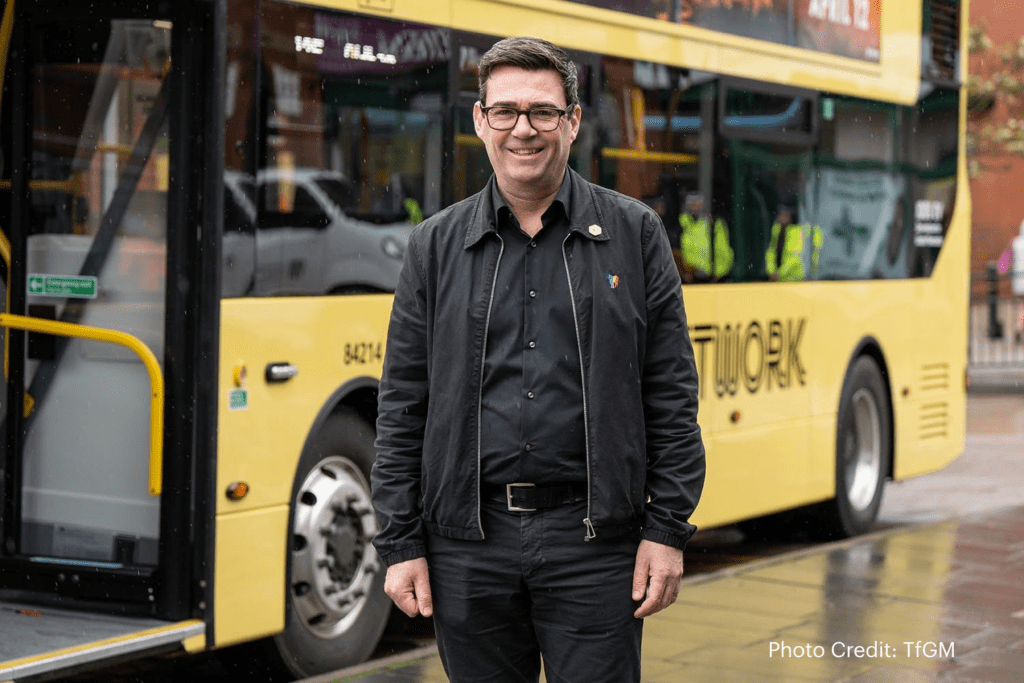
The Bee Network is widely regarded as one of Andy Burnham’s defining achievements as Greater Manchester Mayor. His ambition to create the UK’s first fully integrated, London-style public transport network has now largely been realised. Today, its distinctive yellow buses and trams have become part of the fabric of the UK’s most rapidly growing city-region.
During Burnham’s time as Mayor, bus services were brought back under public control through franchising, and buses and trams unified under the Bee Network. ‘Tap and go’ ticketing and fare capping was introduced on bus and tram, and heavy rail integration is in the wings.
Is Greater Manchester the blueprint?
With Burnham now in Number 10, can we expect to see this approach for transport rolled out across the UK? In his first speech as Prime Minister, he set out an agenda centred on political change and devolution. While he didn’t mention transport specifically, the language reflected his deep-rooted belief in the need for greater public control of life’s essentials.
On day two of its administration, the Burnham government announced that single bus fares across England will be capped at £2 from January 2027, reducing maximum fares by up to a third for millions. The policy builds on the experience of introducing fare caps in Greater Manchester to enable more people to afford essential travel to work, education and services.
With the cost-of-living crisis a priority for the newly rebooted UK government, and pressure to deliver visible change, what could this mean for the future of UK transport?
Possible focus areas could include…
1. Integrated transport networks across more city-regions
Burnham has argued that London transport should not be in a league of its own. So it’s reasonable to expect that networks following the London example are on his wish list for every city-region, allowing the same experience of simplified, better connected journeys.
With Greater Manchester leading the way, and Liverpool City Region, West Yorkshire and South Yorkshire already on their own journeys towards integrated transport networks, a Burnham government may seek to extend this approach across England. The goal would be a more joined-up travel experience with a single network identity, seamless ticketing, coordinated timetables, and active travel woven into the wider transport network.
2. Expansion of bus franchising
While bus franchising can take different forms, as outlined in our recent whitepaper, Burnham has favoured the London model. This approach sees local transport authorities design the network and set routes and fares, private operators compete for contracts, and elected mayors take responsibility for performance.
With franchising already being rolled out by several combined authorities, a Burnham government could accelerate this shift, positioning franchising as the preferred model for bus services while supporting transport authorities to adopt an approach that reflects local needs.
3. A national contactless open-loop payment system
As more city-regions adopt the single network approach, creating a more consistent payment experience across the country could become a natural next step. This doesn’t mean identical fares everywhere, but a common way of paying across the country using contactless EMV bank cards or digital wallets. A national contactless open-loop payment system could include:
- Tap-on, Tap-off travel nationwide
- Daily and weekly fare caps to improve affordability
- Integrated ticketing between local and national transport
- One account for journeys across multiple regions
4. Integration of rail into local transport
With Great British Railways already underway, a Burnham government may focus on further reform: integrating local rail into city-region transport networks. Burnham has supported the integration of suburban rail with buses, trams, and active travel within a single branded network, with rail stations becoming more effective multimodal transport hubs.
Under this model, GBR would provide the national framework, while local leaders would have greater influence over the planning and integration of local rail services.
5. Stronger devolution
Burnham has consistently argued that moving power away from Westminster is essential for improving public services, growing regional economies and rebuilding trust in politics. Transport could become a flagship example of how this devolved power can result in better outcomes for cities, regions and communities all over the UK.
This could mean long-term transport funding settlements, more powers for metro mayors and combined authorities, fewer competitive bidding processes, and greater local control over investment priorities.
6. Public transport as economic infrastructure
Burnham has consistently argued that transport is about more than moving people. He sees it as a way to reduce regional inequalities while helping people and places to thrive. His government may continue to position transport as a route to boosting employment, improving access to education and healthcare, and a key driver for economic growth.
Investment decisions could therefore be judged not just on fare revenue, but also on what’s likely to support wider economic and social outcomes.
7. Simpler, more affordable fares
The guiding principles of Greater Manchester’s Bee Network were to make transport affordable, accessible and simple. It would be reasonable to expect continued emphasis on giving passengers the ability to move freely, using any combination of transport modes, without worrying about multiple tickets or complicated fare structures.
Delivering this experience depends not only on policy, but also on the technology that sits behind it. Account-Based Ticketing (ABT) and contactless open-loop payments help transport authorities to introduce fare capping, integrate fares across modes and give passengers confidence they will always pay the best available fare.
What the Bee Network tells us
“When we launched the Bee Network, our vision was clear: to create a fully integrated, London-style public transport system that puts people first.” – Andy Burnham
The Bee Network shows what’s possible when public transport is designed around the passenger. By creating a more consistent travel experience, it provides a glimpse of what joined-up transport could look like in more towns and cities across the UK.
For transport authorities, delivering that experience will depend on having the right technology in place to connect operators, transport modes and fare systems into one seamless network. Littlepay is ready to engage with any authorities looking to explore the payments infrastructure it has built specifically to make simpler, connected, multi-modal journeys possible.
Earlier this year, it was selected to provide the shared broker platform at the heart of Project Coral. The landmark DfT-funded national programme aims to make contactless pay-as-you-go travel work across multiple transport operators and modes, without requiring authorities to rip out and replace existing ticketing systems.
Get in touch with our team to discuss your fare collection challenges and priorities.
Photo Credit: TfGM
 Insight
 Knowledge
 News
News